
Marina Flores
Arriving in Las Palmas Without Knowing Anyone: How I Built My Community as a Digital Nomad
Arriving in Las Palmas Without Knowing Anyone: How I Built My Community as a Digital Nomad
I arrived in Las Palmas de Gran Canaria in April 2023 with my laptop, one suitcase and not a single contact on the island. Today it is my base. Along the way I learned that a city does not hand you a community just because you showed up: first you have to look for it and, at some point, create it.
I recently interviewed María and Jean-Baptiste, the founders of NomadWay, on my YouTube channel Viajar con mi trabajo remoto. We talked about building community when you work from anywhere, and as I listened I recognised every stage of my own arrival in Las Palmas. This article is that story: what worked, what did not and what I would do differently.
Why I chose Las Palmas for remote work
My choice started out very rational. I was looking for an affordable digital nomad destination, and Las Palmas kept appearing among the cheapest. I also wanted to be in the Canary Islands: I had read that they are among the sunniest places in Europe and that the weather is warm all year round.
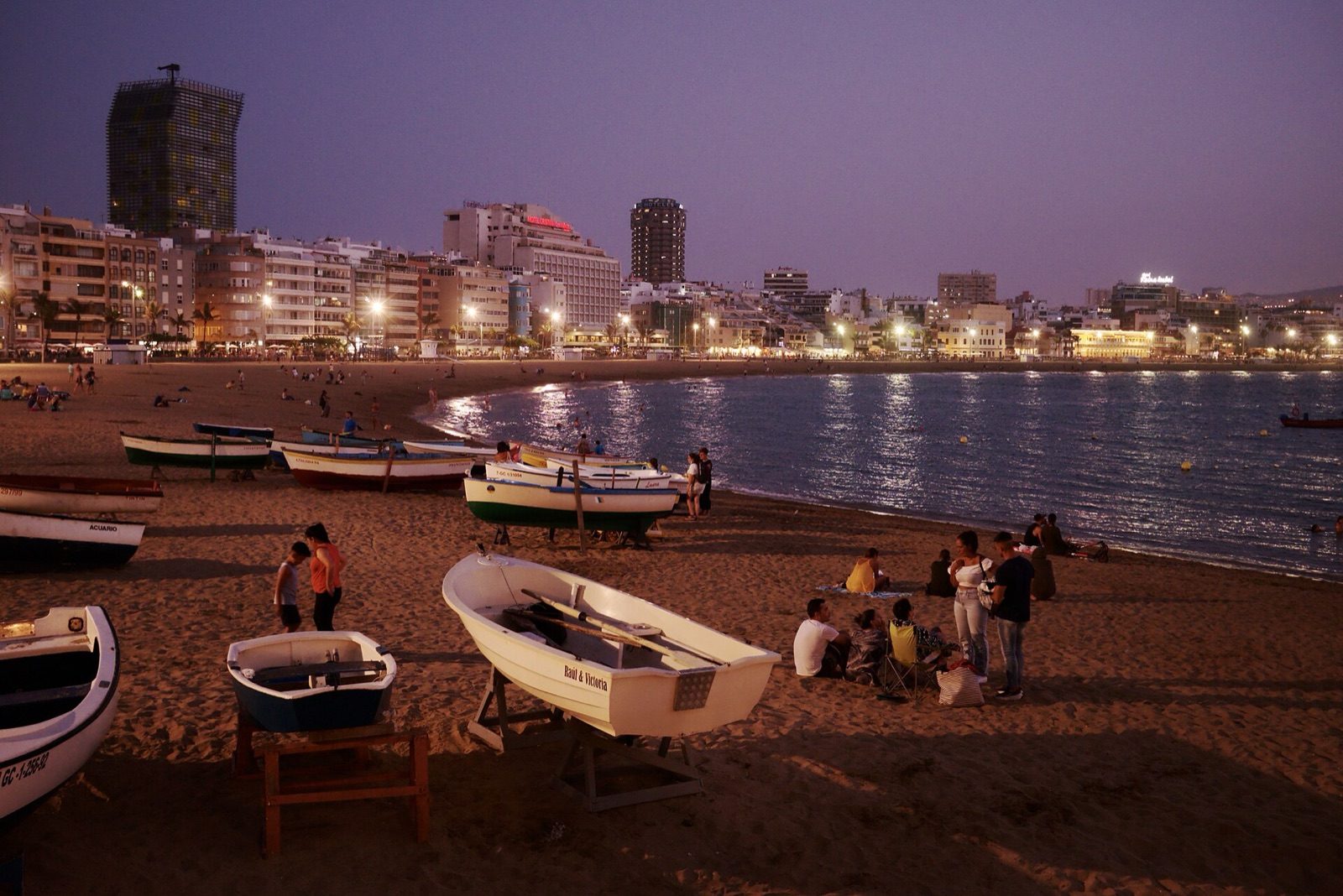
Then I saw the photos of the beach and the decision stopped being rational. I fell in love with Las Palmas before I ever set foot there.
The first month: coliving as a shortcut to meeting people
I decided to spend my first month in a coliving space with other remote workers, and it was the best way to start. I did not have to look for anyone: the community came with the room.
Those first weeks were all about going out and exploring. We went to the beach together and split the cost of a rental car to travel around the island. Within days I had a group of friends, so I never felt the need to look for people on apps.
If you are arriving in Las Palmas on your own, my first tip is this: book your first month in a coliving. It saves you the hardest part, which is starting from zero.
When the coliving ends, so does the group
What nobody told me is that this community had an expiry date. When I decided to stay beyond that first month, the group slowly broke up: everyone moved on to their next destination and I stayed in the city without my network.
In the interview, the NomadWay founders explained this very well. Every coworking or coliving has its own community, which is really a community of customers, and when people leave, the contacts are usually lost. That is exactly what happened to me.
So I started again, this time looking for people myself: dance classes, apps to meet people and meetups run by different groups. It was slower than in the coliving, but it opened me up to people who were not just passing through. If you are in the same situation, this guide on how to build a network as a digital nomad is a good place to start.
Where to meet people in Las Palmas
Today I live in La Cícer, at the southern end of Las Canteras beach, and there is a lot going on here. There are coworking spaces everywhere. Laptop-friendly cafés are less common, but there are plenty of places to meet people.
Social life revolves around the beach. People play volleyball and other sports, and there are running clubs. If you enjoy any of these activities, you will meet people very quickly.
My advice is to pick one activity you enjoy and keep going back. Seeing the same faces every week is what turns an acquaintance into a friend.
Nomads and locals: a harder connection than it looks
I will be honest: most of my friends in Las Palmas are not Canarian. They are people who came and stayed, or who come for a season and then leave.
It is not for lack of interest. I work remotely all day, so I do not have the place where most people make friends in a new city: a job with local colleagues. It is one of the least talked-about downsides of this lifestyle.
In the interview, María explained how NomadWay tries to act as a bridge between nomads and locals, for example by sharing local initiatives in the app such as tree planting or beach clean-ups. It is a good way to feel part of the city and not only of the nomad community, an idea NomadWay explores further in what if cities measured belonging instead of just visitor numbers.
Leaving to confirm I wanted to stay
After five months I had to leave the island for tax reasons. And I was not sure I wanted to come back.
By then I had met my boyfriend, on the beach, and we spent every day together. Even so, I was not sure about staying. I was a little tired of the island and needed to see other places before deciding.
I went back to Argentina and travelled to Porto, Madeira and other destinations. Comparing them confirmed what I already suspected: Las Palmas was the best place for me to stay and make my base.
We talked about this in the interview too: more and more nomads have a base they return to between trips, a rhythm that also makes balancing work and travel easier.
What I would do differently: create the plans myself
I have a confession: I have never organised a plan myself. I have always joined plans other people organised.
María recommends the opposite. If there is nothing happening in your city, create the coffee meetup or the event yourself: even if there are not many people nearby, another nomad may well join. That is how the NomadWay community started in Alicante, where at first there was nothing.
The other thing I would do differently is connect before arriving. In NomadWay you can switch cities in the app and see who is in your next destination before you land, and even sort out accommodation through the community. When I arrived in Las Palmas I did not know anything like that existed.
Checklist for your first weeks in Las Palmas
- Book your first month in a coliving so you have a group from day one.
- Before you arrive, look up Las Palmas on NomadWay and post in the city groups.
- Pick a beach activity, such as volleyball, running or dancing, and repeat it every week.
- Join meetups and events run by the international community.
- Organise at least one plan yourself: a coffee, a day trip or an afternoon at the beach.
- Look for local initiatives, such as volunteering or neighbourhood activities, to meet Canarians too.
- If you are unsure whether to stay, give yourself permission to compare other destinations.
FAQ: being a digital nomad in Las Palmas
Is Las Palmas a good destination for digital nomads?
In my experience, yes. It was one of the most affordable nomad destinations I found, the weather is warm all year, it has an urban beach with a busy social life and coworking spaces on almost every street in areas like La Cícer.
What is the best area to live in Las Palmas as a remote worker?
I live in La Cícer, next to Las Canteras beach. It has coworking spaces, sports and plenty of social life, so it is a good choice if you want to meet people quickly.
How do you meet people in Las Palmas if you arrive alone?
What worked best for me was spending the first month in a coliving. After that: beach activities, dance classes, meetups and community apps like NomadWay.
Watch the full interview
If you want to hear María and Jean-Baptiste talk about how NomadWay started, what a base means for a nomad and how to fit into a place without imposing your culture, here is the full interview (in Spanish): Cómo crear comunidad cuando trabajas desde cualquier lugar.
About the author: Marina Flores works remotely from Las Palmas de Gran Canaria. On her YouTube channel, Viajar con mi trabajo remoto, she talks with people who live and work while travelling. More resources at viajarconmitrabajoremoto.com.